
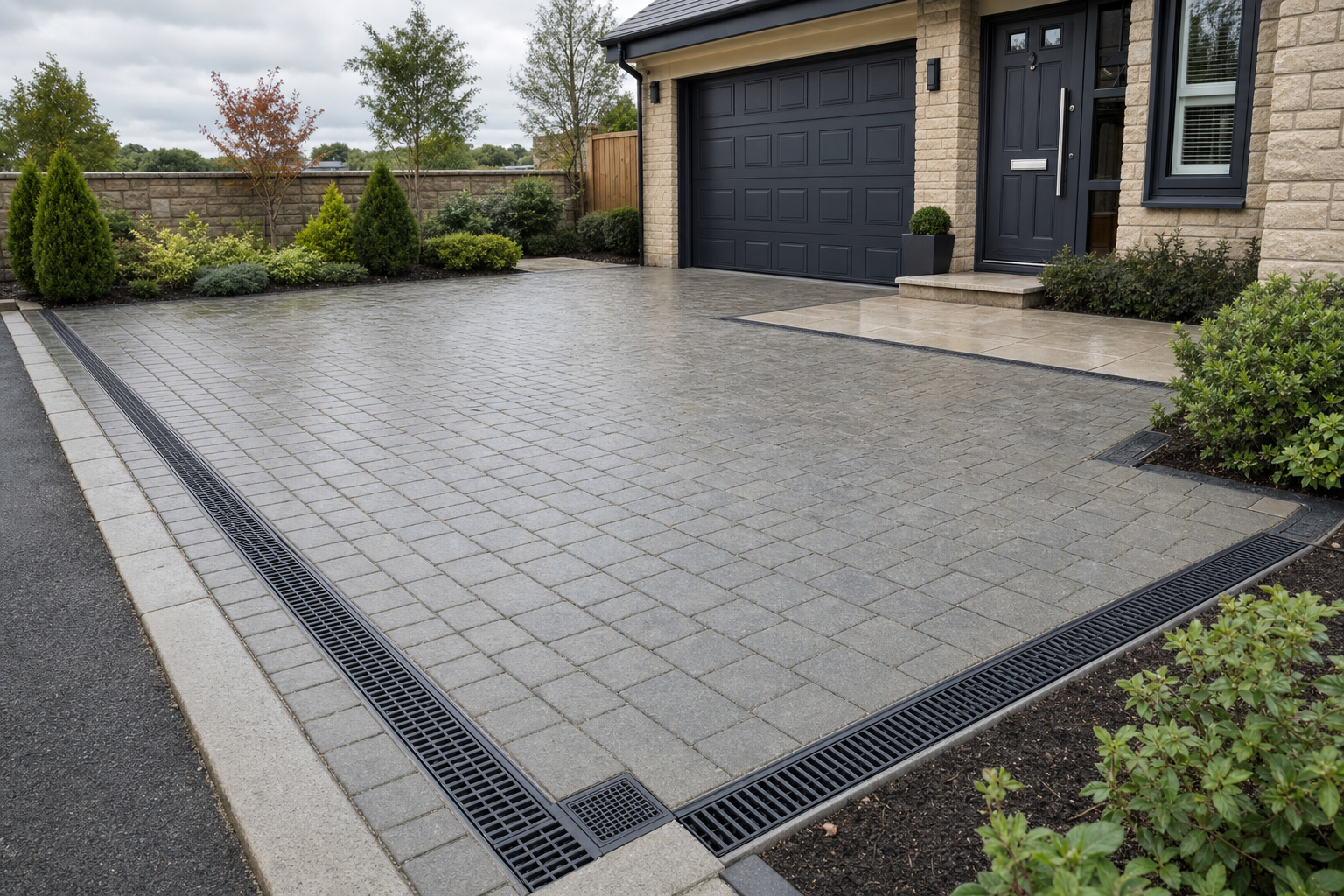
What good drainage protects you from
Puddles tackled at source
Drainage is planned into the build so water does not linger on the surface.
Levels checked early
Thresholds, soil and falls are considered before the final surface goes down.
Upkeep stays straightforward
Clear channels and outlets help the drainage keep working long after the build.
Bad drainage shows up long after the new surface looks done
A smart new surface soon stops feeling smart if rainwater sits on it. Puddles, slippery patches, saturated edges and water creeping back towards the house are usually signs that drainage was treated as an afterthought. With Pegasus Property Solutions, driveway drainage solutions are planned as part of the build, not added in a panic at the end. We look at existing levels, thresholds, soil conditions and where water can discharge safely, then shape the surface so it does what it should in bad weather as well as dry spells.
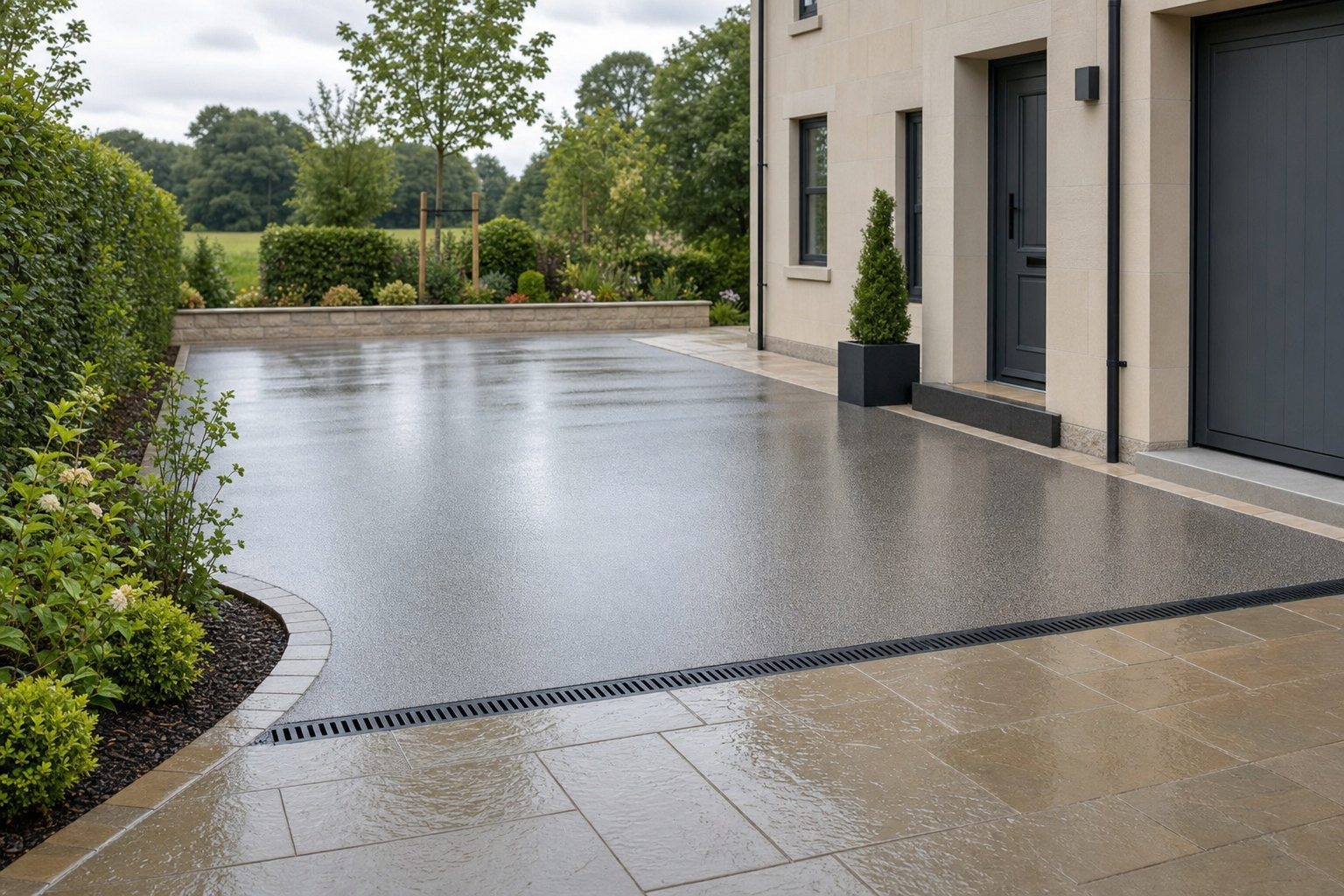
The best drainage is built in, not bolted on
The right answer depends on the site. Choosing Pegasus Property Solutions means we can form sensible falls, fit channel drains or gullies and plan suitable below-ground arrangements where they are needed, all during excavation and base preparation. That is usually far more effective than trying to correct a finished surface after the fact. Once installed, the system still needs basic upkeep, so we also explain why keeping channels, gratings and outlets clear matters if you want the drainage to keep doing its job.
Frequently asked questions
Why does drainage need planning before the surface is laid?
Because the surface levels and the drainage work together. If the falls, channels or outlets are not considered until the end, you may already be stuck with the wrong levels. It is usually far easier to build drainage into excavation and base work from the start.
Will every driveway or patio need channel drains?
Not always. Some sites can be managed with carefully formed falls alone, while others need channels, gullies or below-ground drainage. The right answer depends on levels, thresholds, soil and where the water can go once it leaves the surface.
What upkeep does a drainage system need?
Even a well-built system needs basic maintenance. Channels, gratings and outlets should be kept clear so water can move through them freely. If debris is left to build up, the drainage may slow down or back up onto the surface during heavy rain.