
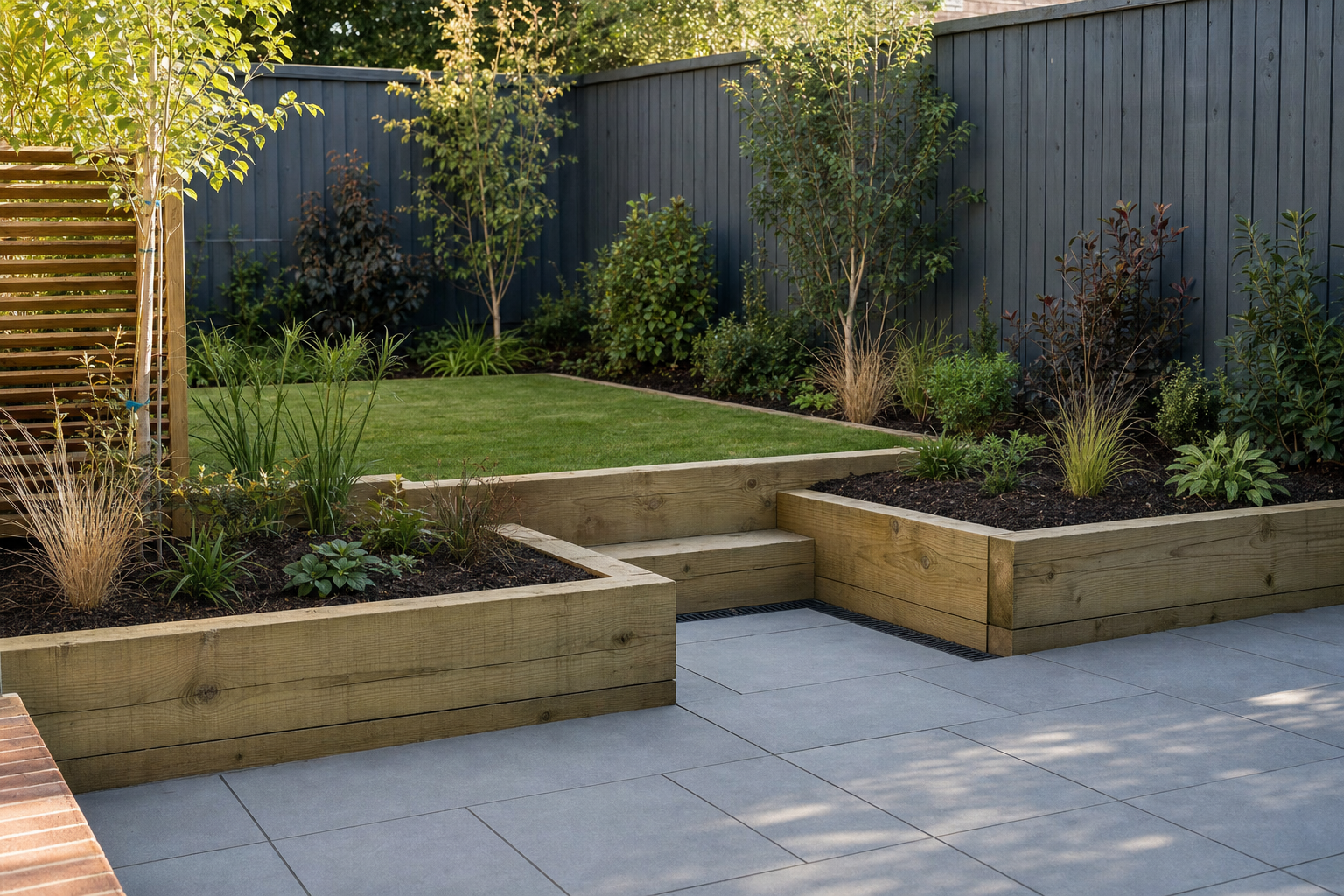
Why sleeper work needs more than straight lines
Useful shape in awkward spots
Sleepers can define beds, edges or steps where the garden needs clearer form.
Strong enough for level changes
Stable bases and fixings matter when sleepers are supporting soil or steps.
Care expectations explained
We talk through weathering, treatment and checks so the timber ages sensibly.
Sleepers help gardens where shape matters as much as surface
Sleepers are useful when a garden needs shape as much as surface. They can edge a lawn, build raised beds, form low steps or help manage a small change in level without the space feeling overworked. With Pegasus Property Solutions, garden sleeper installation starts with what the feature needs to do, not just where a piece of timber will fit. We look at size, layout and how the sleeper work will sit against paving, turf or planted areas so the finished result feels like part of the garden rather than an add-on.
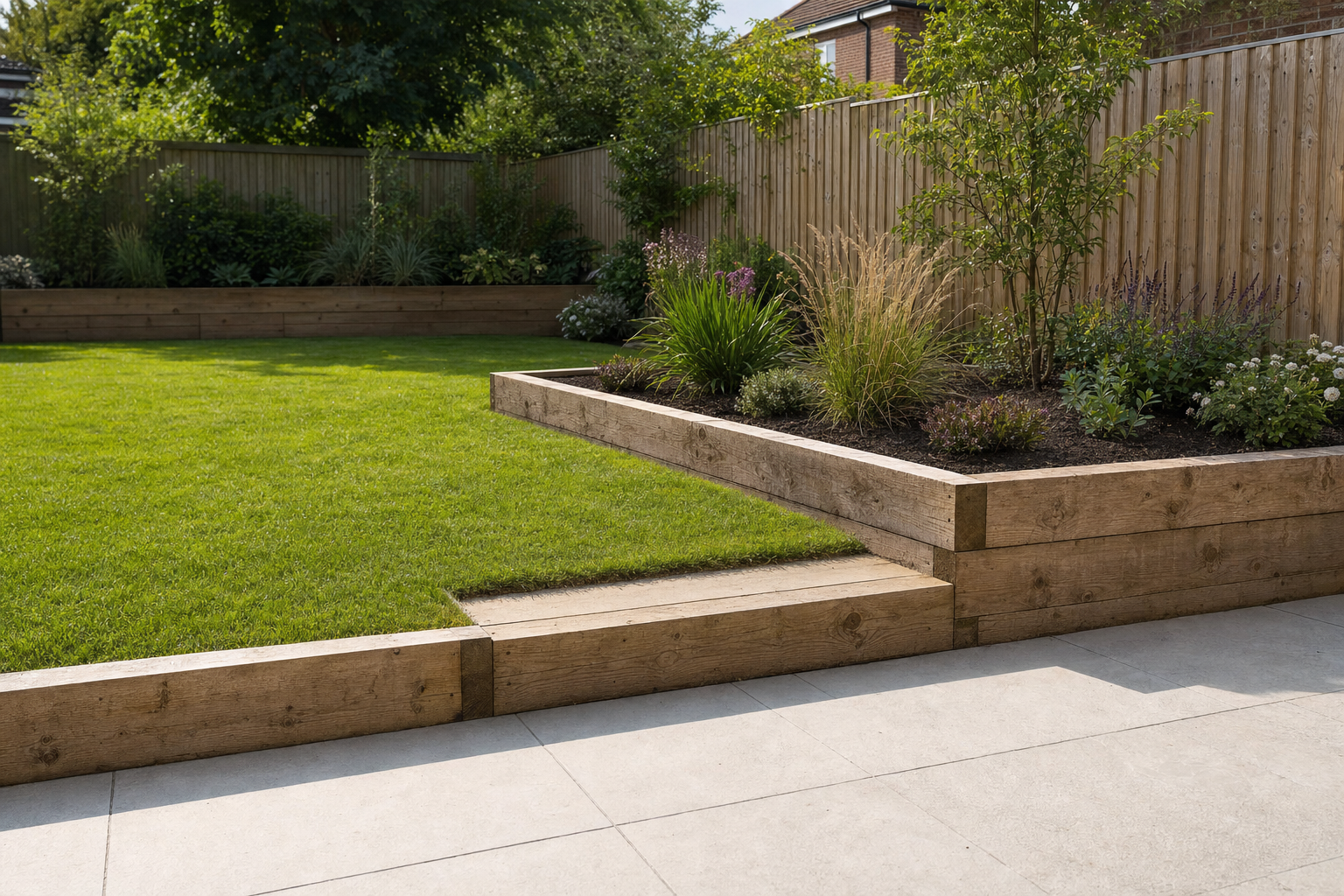
Solid groundwork keeps sleeper features useful
Even a simple sleeper feature needs sound groundwork. Choosing Pegasus Property Solutions means stable foundations, secure fixings and straight alignment are dealt with properly from the start, especially where sleepers are supporting soil or holding a level change. In retaining situations, drainage behind the structure matters just as much as the front face you can see. We also explain what to expect from timber as it weathers and why occasional checks help you catch movement or wear before it turns into a bigger repair.
Frequently asked questions
What can sleepers be used for in a garden?
They are versatile. Sleepers can form raised beds, edge lawns, create low steps and help manage level changes between different parts of the garden. Exactly what suits best depends on the space, the look you want and how the feature connects with nearby surfaces.
Do sleeper features need foundations and fixings?
Yes. Even where the structure looks simple, stable bases, secure fixing and accurate alignment are important if you want it to stay sound. That is especially true when sleepers are holding back soil or creating a step that will take regular use.
When is drainage needed behind sleeper work?
If the sleepers are acting as a retaining feature, drainage behind them becomes important. Water pressure and saturated soil can cause problems over time, so the support behind the structure matters just as much as the face you can see from the garden.